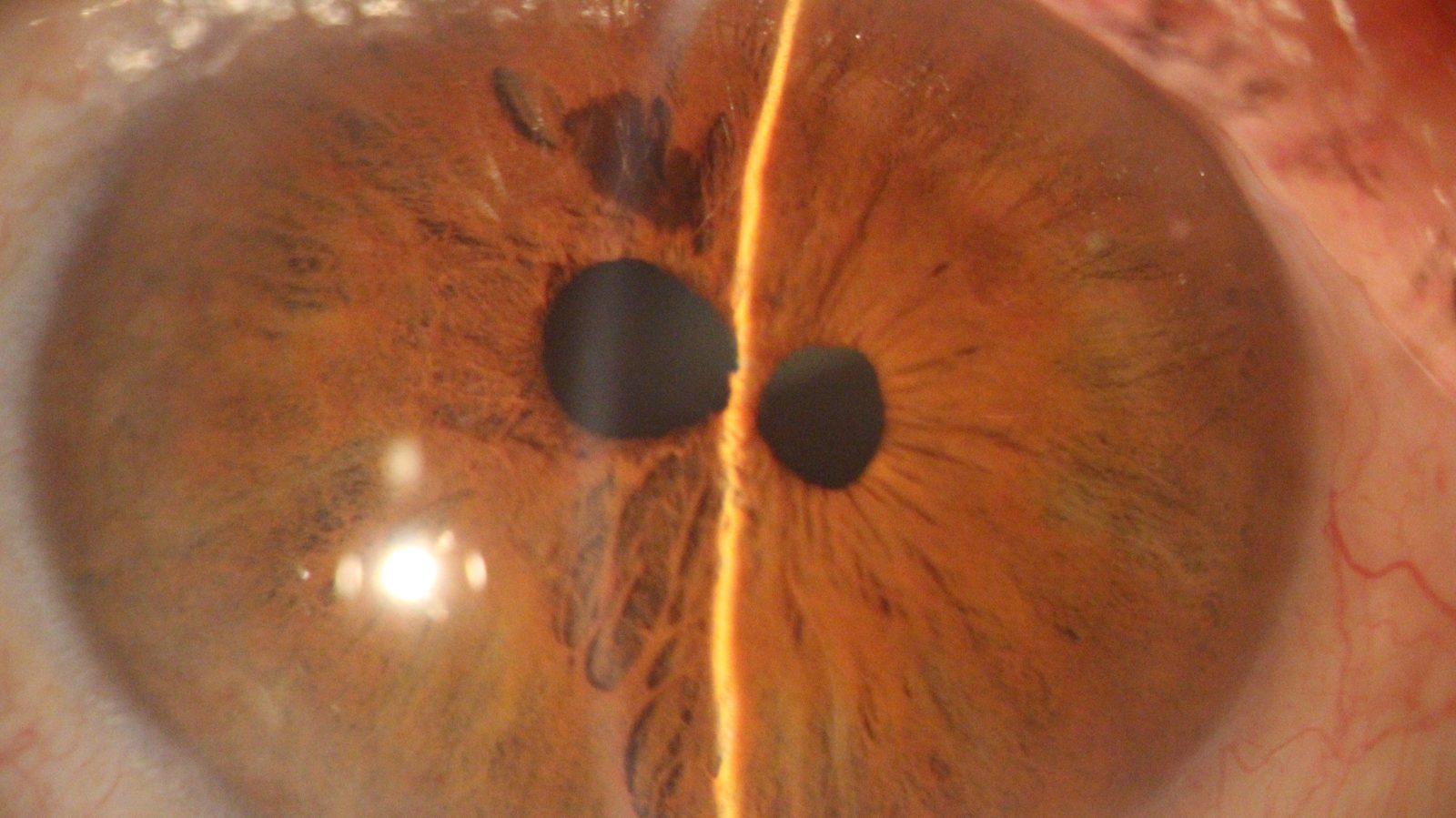
The post
The post by plastron 𓆉 (@TimesUpThanks) has this text from the Shiji, with a note in English.
The Chinese text is from the end of the biography of Xiang Yu. In English, it says this:
- "I heard from Master Zhou that the eyes of Shun probably had double pupils."
- "I also heard that Xiang Yu had double pupils."
- "Was Xiang Yu possibly a descendant of Shun?"
The historian Sima Qian wrote this in approximately 90 BCE. He only repeats what other people told him. The word 蓋 ("probably") shows that he was not sure.
Who was Shun?
Shun is one of the "Five Emperors" of the legends. The tradition puts him in approximately the 23rd century BCE. There is no archaeological evidence for him. His story comes from the Book of Documents, from Mencius, and from the Shiji.
His personal name was Chonghua (重華), "Double Brilliance". Some later writers connect this name with his double pupils.
A family that wanted him dead
The father of Shun was Gusou, the "Blind Old Man". After the mother of Shun died, Gusou married again. The stepmother and her son Xiang wanted the property of Shun. Gusou helped them. Mencius (5A.2) tells two of their attempts to kill him.
- The granary. They told Shun to repair the roof of a granary. Then they set fire to it. Shun held two wide straw hats and jumped down safely.
- The well. They told Shun to dig a well. Then they filled it with earth. Shun escaped through a side tunnel.
After the well, Xiang went to take the house of Shun. He found Shun there, and Shun played the zither. Shun did not punish him. He continued to be kind to all of his family.
How Yao chose him
Yao did not choose Shun because his family was bad. He chose Shun because Shun stayed loyal and kind to a bad family. For the Confucians, this was the best proof of virtue.
- Yao heard of Shun when Shun was approximately 30 years old.
- Yao gave his two daughters, Ehuang and Nüying, to Shun as wives. He sent his nine sons to live near Shun. Thus Yao saw the conduct of Shun at home.
- Shun farmed at Mount Li, fished at Lake Lei, and made pottery. People moved to live near him. His village became a town in one year and a city in three years.
- The legend says that elephants ploughed his fields and birds pulled his weeds. Thus Shun is the first story in the Twenty-Four Filial Exemplars.
Yao did not give the throne to his own son, Danzhu, because Danzhu was not a good man. Shun became regent, and then emperor.
Shun as ruler
- He made the units of measurement and the calendar the same in all regions.
- He sent away the "Four Criminals", four bad officials or tribes.
- He gave Yu the task to control the Great Flood. The father of Yu failed at this task, but Yu succeeded.
- He did not give the throne to his own son. He gave it to Yu. The Confucians call this "abdication to the worthy" (禪讓, shanrang).
Shun died during a tour of the south. His two wives cried at the Xiang River. The legend says that their tears made the spots on the spotted bamboo of the Xiang River. They drowned in the river and became its goddesses.
The double pupils in the texts
Three types of text tell of the double pupils (重瞳, chongtong).
- The Shiji passage in the post above. It is the most famous source.
- The Xunzi, in the chapter "Against Physiognomy" (非相). It gives a list of sages with strange bodies. Its argument is that the body does not show if a person is good.
- Texts of the Han dynasty and after. They made double pupils a standard sign of a sage. The texts also give double pupils to the general Xiang Yu and to Li Yu, the poet and last ruler of Southern Tang.
Mencius itself does not describe the eyes of Shun. Its passage on pupils (4A.15) is about all people. It says that the pupil of the eye cannot hide the evil in a person.
Polycoria: more than one pupil in an eye
Polycoria is a condition of the eye with two or more pupils in one iris. Usually, one pupil is at or near the center and it is the largest. The other pupils are smaller. They can be side by side or one above the other. Sometimes two pupils touch, and the shape is like the number 8. The condition can occur in one eye or in the two eyes.
| Type | Description | Frequency |
|---|---|---|
| True polycoria | Each pupil has its own muscle. Each pupil becomes smaller in bright light and larger in the dark. | Very rare |
| Pseudopolycoria | The extra holes have no muscle. They do not change size with light. | More frequent |
The photograph at the top of this post shows true polycoria. The text of the contest says that the two pupils each have an intact sphincter, the ring of muscle that makes a pupil smaller.
These are some causes of pseudopolycoria:
- Holes in the iris after an injury or after surgery.
- Some diseases of the iris, for example Axenfeld-Rieger syndrome or ICE syndrome.
- A coloboma, a gap in the iris that is present at birth.
- Thin tissue from before birth that stays across the pupil.
Many persons with polycoria have no symptoms. Some persons see a blurred image or a double image with one eye. Bright light can cause glare and pain. Glasses or tinted contact lenses can decrease the glare. A surgeon can also join the pupils into one pupil. This operation is a pupilloplasty.
Did Shun have polycoria?
We cannot know. Shun is a legend, and the texts are many centuries after his time. The "double pupils" were possibly polycoria. They were possibly a coloboma, a cataract, or a ring of colour in the iris. Possibly, they were only a sign of a special person and not a medical fact.
The real condition is very rare. Thus a person with two pupils in an eye was a strange sight. That is possibly why the old writers gave this sign to sages and heroes.
Sources
- Sima Qian, Shiji, "Basic Annals of Xiang Yu" (項羽本紀), at ctext.org.
- Mencius 5A.2, 4A.15 and 7A.35, at ctext.org.
- Xunzi, "Against Physiognomy" (非相), at ctext.org.
- Pupilloplasty in a patient with true polycoria: a case report, Arquivos Brasileiros de Oftalmologia, 2016.
- True polycoria associated with urogenital system anomalies, Turkish Journal of Ophthalmology, 2010.